
PIUSI B.SMART
Piusi S.p.AAuto & Vehicles
4.06.00 Reviews
- Version
- 2.4.2
- Installs
- 50.00K
- Age Rating
- Everyone
Screenshots

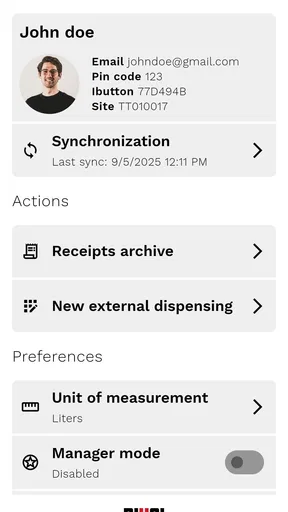
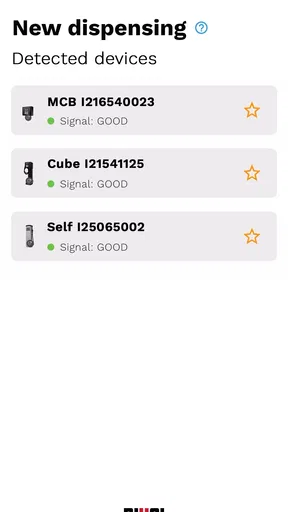
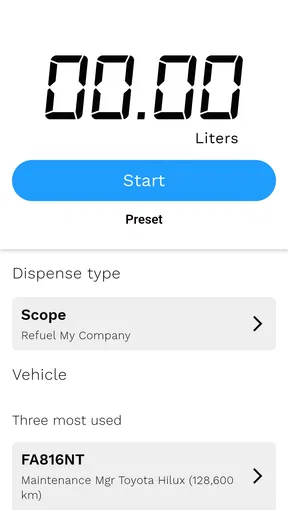
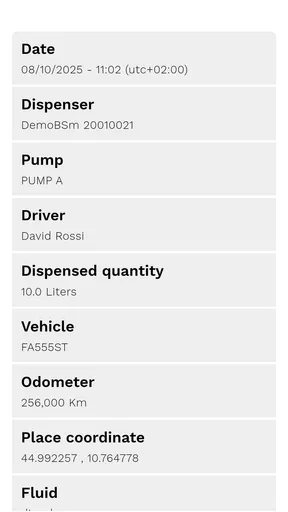
Our Review of PIUSI B.SMART
 Analysis by Appyee
Managing fuel consumption across several vehicles is the kind of job that looks simple until records start coming from different drivers, pumps, tanks, and notebooks. I found PIUSI B.SMART most interesting as a focused fleet-management app rather than as a general driving companion. It is designed around the PIUSI fuel-management ecosystem, so its value depends heavily on whether your vehicles and refuelling setup already belong to that environment.
That distinction matters before downloading it. This is a free Auto & Vehicles app from Piusi S.p.A, aimed at people who need a clearer view of fleet fuel use. It is available for Everyone and has passed the point where it feels like an experimental release: the app was released on September 14, 2019, and the current version is 2.4.2. I would not choose it simply because it is free; I would choose it because the workflow behind it matches the way my business handles fuel.
What I would check before choosing a fleet fuel app
My first decision criterion is not the interface. It is compatibility with the physical process. A fuel app can only be useful if the information entering it reflects what actually happened at the vehicle or storage point. With B.SMART, I would first establish whether the company is already using compatible PIUSI equipment and whether the people responsible for vehicles, fuel, and administration agree on the same recording routine.
That sounds obvious, but it is where many fleet projects go wrong. A manager may expect automatic visibility while drivers continue to record refuelling in a notebook. An operator may expect vehicle-level accountability while the business identifies equipment only by informal names. Before relying on the app, I would create a simple internal naming convention for vehicles, machines, and users. That small step makes later records much easier to interpret.
I would also decide what question the app must answer. “How much fuel did we use?” is too broad. A useful question might be whether a particular vehicle is consuming more than usual, whether fuel is being assigned to the correct asset, or whether the company is buying fuel without a clear link to productive work. The clearer that question is, the easier it becomes to judge whether B.SMART is helping rather than merely collecting activity.
The app has a 4.0 average from around 183 ratings, with six written reviews visible in its store presence. I read that as a reasonable sign of interest, but not as proof that every fleet will have the same experience. A fuel-management tool is unusually dependent on installation, equipment, user habits, and the size of the operation. The same app can feel valuable to a depot and unnecessary to a person managing one private car.
The everyday workflow I would use
Imagine a small landscaping company with several vans and powered machines. At the start of the week, the owner wants to know which assets are being fuelled, how often, and whether the usage makes sense against the work scheduled. Instead of waiting for receipts to arrive in a folder, the person responsible for fuel can use the PIUSI setup and its app-based management process to keep the information closer to the moment of refuelling.
At the end of the week, I would review the records by asset and look for exceptions rather than staring at every entry. A vehicle that suddenly appears more often than normal, a machine that receives fuel despite being out of service, or a group of entries made at an unusual time deserves a closer look. The important insight is that the app is more useful as a routine for spotting questions than as a magic answer to them.
I would also separate operational review from disciplinary action. A surprising fuel record may come from a wrong vehicle selection, a shared machine, a maintenance run, or a delayed entry. Treating the first unusual record as proof of misuse would create distrust and could make drivers avoid the system. B.SMART works best when the company defines a calm process for checking anomalies.
Why the PIUSI connection changes the decision
The strongest reason to consider this app is its connection to PIUSI’s own fuel-management approach. That gives it a more specific purpose than a generic mileage tracker. A mileage app usually starts with journeys, distance, and driving behaviour. B.SMART is more relevant when the central event is controlled fuelling and the business wants that event associated with fleet consumption.
That focus can be a real advantage for companies with an internal tank, a worksite fuelling area, or vehicles that do not always travel on public roads. A standard navigation or mileage application may have little useful context for a tractor, generator, construction machine, or service vehicle that spends most of its time away from normal routes. In those cases, fuel records can be more meaningful than trip maps.
It also changes how I would compare the app with spreadsheets. A spreadsheet is flexible and familiar, but it relies on someone entering information consistently, preserving the right columns, and checking errors later. B.SMART is the more natural choice when the business wants a repeatable fuel process tied to PIUSI equipment. The spreadsheet remains attractive for unusual reporting, custom calculations, or a very small operation where setting up a dedicated system would take longer than the problem justifies.
Practical strengths for a working fleet
One useful strength is the possibility of moving fuel oversight away from a single person’s memory. In many small fleets, the owner knows which vehicle was used, who filled it, and whether the amount sounds right. That works until the fleet grows, the owner is away, or several people refuel at different times. A shared digital routine gives the business a better chance of building a usable history.
Another strength is the way a dedicated fuel view can encourage better conversations. Instead of asking drivers to explain every receipt, a manager can compare records by vehicle or equipment and discuss only the entries that need context. This is less intrusive and more efficient than checking every journey, especially for businesses where drivers have legitimate reasons to take different routes or operate in changing conditions.
A third, less obvious benefit is that fuel records can improve planning even when they do not reveal a problem. If certain assets regularly need attention before a busy work period, the company can schedule fuelling as part of preparation rather than treating it as an emergency. That is not a dramatic feature claim; it is a practical result of having a consistent record that people actually consult.
For a business with several operators, I would introduce the app with a short written procedure. It should explain which asset to select, when a refuelling event is recorded, who checks unusual entries, and what happens when a vehicle is shared. Without that procedure, the technology may simply digitise confusion. With it, the app has a fair chance of becoming part of daily operations.
Where another type of tool may fit better
I would not recommend B.SMART to someone looking only for personal fuel reminders, route planning, parking help, or a simple log of private-car expenses. Those needs are better served by a general driving or expense app because the user is not trying to manage a PIUSI-centred fleet process. Installing a specialised tool for a single household vehicle would probably add friction without delivering enough value.
I would also be cautious if the main goal is full telematics. A telematics platform is normally chosen when a company needs a broad picture of location, driving behaviour, maintenance, and vehicle activity in one place. B.SMART’s appeal is narrower: it is about fuel consumption management within the PIUSI context. If route history and live vehicle visibility are the primary decisions, I would compare it with a fleet platform built around those functions instead.
Large organisations may prefer a wider enterprise system if they need many departments, complex approvals, accounting connections, or highly customised reporting. That does not make B.SMART a poor product; it simply means the buying decision should follow the organisation’s process. A focused system can be easier for a small or medium fleet, while a broad platform can make more sense when fuel is only one part of a much larger operation.
There is also a human alternative: a carefully designed spreadsheet with a receipt folder and a weekly review. I would choose that route for a very small fleet with few refuelling events and one person responsible for all records. The trade-off is obvious. The spreadsheet costs less in setup and can be changed instantly, but it is more vulnerable to missing entries, inconsistent names, accidental edits, and delayed reviews. B.SMART becomes more compelling as those weaknesses start costing time or trust.
The friction I would expect during adoption
The biggest likely friction is not learning where to tap. It is changing behaviour around refuelling. Drivers may already have a habit that feels quicker, and managers may underestimate how much explanation is needed when a digital record becomes part of an operational process. I would begin with a small group, observe where entries become unclear, and adjust the procedure before involving everyone.
I would also avoid promising perfect data from the first day. The first records are useful for testing the workflow, but they may reflect mistakes in asset selection or inconsistent timing. A short settling-in period lets the company discover whether the chosen process is practical. If people have to stop work repeatedly or ask a supervisor for help, adoption will suffer even if the app itself is sound.
Another trade-off is focus. Because B.SMART is tied to fuel management, it may feel refreshingly direct to a depot manager and too limited to someone expecting a complete fleet command centre. I prefer that focused design when the business has a clear fuel problem. I would look elsewhere when the company wants one application to cover every vehicle-management task.
What switching would really involve
Moving from paper or a spreadsheet is not just a download-and-go decision. I would first collect the current vehicle and equipment names, remove duplicates, and decide how to handle assets that are shared or temporarily replaced. I would then choose a starting date for the new process rather than trying to rebuild every historical record immediately. A clean starting point is usually easier to trust than a rushed import of messy old notes.
Next, I would assign responsibility for three jobs: recording fuel activity, checking unusual entries, and using the results. These jobs can belong to one person in a small business, but they should still be named. If everyone is responsible, nobody may feel responsible. If only the driver is responsible, errors may remain unreviewed. If only the manager reviews the app, the information may arrive too late to be useful.
I would keep the old method available briefly as a backup, not as a second permanent system. Running two complete records creates conflicting totals and encourages people to choose whichever version looks more convenient. The better approach is to use the previous method only when the new workflow fails, then record the reason and correct the gap promptly.
Teams should also agree on what action follows a useful finding. If a vehicle’s fuel use looks unusual, will someone inspect it, ask the driver, check maintenance, or simply monitor the next entries? The app can support the review, but the business still needs a decision process. This is one of the most important trade-offs: digital visibility is valuable only when someone is prepared to act on it.
Who should use it, and who should skip it
I see the best fit in small and medium businesses that control or monitor fuel for multiple vehicles or machines and want a more structured alternative to informal records. It is especially sensible when the organisation already uses PIUSI equipment or is deliberately building its fuel process around that ecosystem. The app’s category and purpose are clear enough that the right user can recognise the fit quickly.
I would skip it for a private driver, a person who only wants fuel-price information, or a fleet whose entire management problem is route tracking. I would also pause if the company has no agreed fuelling procedure and no one available to review the resulting information. In that situation, a simpler shared log may be the better first step, followed by a dedicated system once the process is understood.
The app has more than 50,000 installs and is free to download, which makes trying the software less financially demanding than committing to a paid tool at the outset. Still, “free” should not be confused with “costless.” Staff time, equipment compatibility, training, record cleanup, and follow-up all matter. I would judge the investment by whether it reduces uncertainty and manual work, not by the download price alone.
Its Everyone age rating makes it approachable from a general app-store perspective, but the intended use is clearly professional. A family can install it, yet that does not mean it is designed for household budgeting. The audience is the person responsible for fleet fuel, whether that is an owner, depot supervisor, workshop manager, or administrator supporting vehicle operations.
My recommendation after weighing the trade-offs
My recommendation is positive, with a clear condition: choose PIUSI B.SMART when your real problem is controlled fleet fuelling and the PIUSI environment is part of the answer. I like its focused purpose because it avoids pretending that one app must solve every vehicle-management problem. For the right operation, that focus can make fuel conversations more concrete and less dependent on scattered receipts.
I would approach it as a process improvement, not as a passive dashboard. Start by defining assets, users, and review responsibilities. Test the workflow with a small number of vehicles. Look for practical signals such as fewer missing records, quicker explanations for unusual consumption, and a clearer weekly view of where fuel is going. Those are better measures of success than simply having the app installed.
If your needs centre on personal driving, live location, detailed trip analysis, or a broad enterprise fleet suite, another category of tool may serve you better. If your operation is small enough for one careful spreadsheet and fuel activity is infrequent, the change may not justify itself yet. But if fuel is a recurring management concern and informal records are starting to break down, this free app is worth testing within the PIUSI workflow rather than dismissing it as just another vehicle utility.
In my view, the decisive question is simple: do you need a clearer fuel process, or do you need a complete vehicle-management platform? For the first need, B.SMART is a sensible, specialised option from Piusi S.p.A. For the second, I would compare broader alternatives before committing. That honest boundary is also the app’s strength: it knows what it is trying to help you manage.
The current version, 2.4.2, supports devices running Android 7.0 or later, so I would check the phones used by drivers and supervisors before rolling it out. Once that practical detail is settled, I would give the app a controlled trial with one clearly defined fuel workflow. If the resulting records help the team spot issues and plan work with less guesswork, keeping it will be an easy decision.
Verdict
Strengths of PIUSI B.SMART
- Remote monitoring helps track fuel usage and tank levels.
- Supports multiple users with role-based access permissions.
- Compatible with PIUSI fuel management hardware and dispensers.
- Digital records simplify reviewing refueling activity and reports.
- Useful for managing several vehicles, operators, or fuel stations.
Limitations of PIUSI B.SMART
- Requires compatible PIUSI equipment to provide its full functionality.
- Initial setup may be complex for users unfamiliar with fuel systems.
- Some features depend on a stable internet or Bluetooth connection.
- Not useful for personal vehicles without an integrated fuel-management setup.
- Advanced monitoring and hardware may involve additional purchase costs.
Similar Picks in This Category
View All
Android Auto
Google LLC4.1

maxim — order a taxi & food
PT. SITO4.7

Штрафы ГИБДД: проверка с фото
Pays LLC – Штрафы ГИБДД4.7

Номерограм – проверка авто
Авто Ассист4.8

Дром Авто
Дром4.9

Frequently Asked Questions
What is PIUSI B.SMART used for?
PIUSI B.SMART is a mobile management app designed to work with compatible PIUSI fuel dispensing systems. It helps authorized users monitor fuel distribution, identify operators, manage vehicles or equipment, and review transaction records. The app is mainly intended for businesses, workshops, farms, transport companies, and other organizations that need better control over internal fuel consumption.
Does PIUSI B.SMART work with every PIUSI pump or fuel dispenser?
No. PIUSI B.SMART is designed for compatible PIUSI B.SMART systems and connected dispensing equipment, so it may not function with every PIUSI pump or older model. Before downloading, check the product documentation or ask a PIUSI dealer whether your dispenser, controller, and accessories support the application. Compatibility can also depend on the installed hardware and system configuration.
Do I need an account or special hardware to use the app?
In most practical installations, access to PIUSI B.SMART requires a configured system, registered users, and compatible PIUSI hardware. Simply installing the app is generally not enough to begin dispensing or viewing company data. An administrator or system manager normally sets up permissions, users, vehicles, and equipment. Your available features may therefore vary according to your organization’s configuration.
What information can I manage or view in PIUSI B.SMART?
Depending on the connected PIUSI B.SMART installation and your assigned permissions, the app can provide access to fuel transactions, dispensing activity, user identification, vehicle or equipment records, quantities delivered, and related reports. It is useful for tracking consumption and improving accountability. However, the exact information shown may differ between installations, and some administrative functions may be restricted.
Does PIUSI B.SMART require an internet connection, and is it free to use?
The app itself may be available to download without charge, but its practical use depends on the connected PIUSI B.SMART system, account setup, and communication method used by the installation. Some functions may require internet or local network access to synchronize data and communicate with the dispenser. Costs can also depend on the hardware, installation, service plan, or business solution purchased.
